
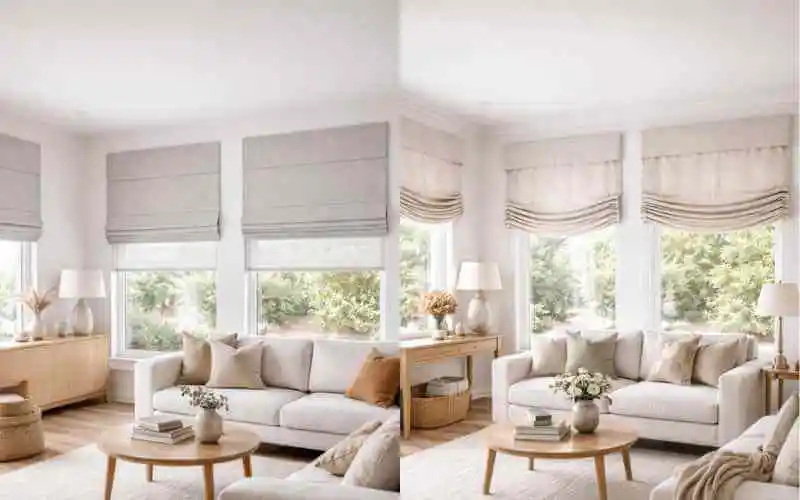

Some homes just know what they are.
You walk in, and it’s clearly modern, clean lines, open space, not a lot of fuss. Others feel layered and classic, maybe with crown molding and furniture that has a little history to it.
And then there are the rest of us, standing in the middle of our living room, wondering:
“Do I go sleek and simple… or soft and traditional?”
Window treatments are usually where that identity crisis shows up first.
Here’s how to figure out what actually makes sense for your home — not just what looks good on Pinterest.
First: Look at Your Bones (Not Your Mood Board)
Before you decide anything, take a hard look at your architecture.
Do you have:
- Wide trim?
- Crown molding?
- Built-ins?
- A fireplace with detail?
If yes, your home probably leans traditional (even if your furniture doesn’t).
Homes with clean drywall returns, minimal trim, and big open windows usually lean modern.
Your window treatments shouldn’t fight your architecture. They should support it.
Putting ultra-ornate treatments in a super minimal home can feel like wearing a ballgown to a coffee run. And putting very stark panels in a traditional room can make it feel unfinished.
What “Modern” Actually Looks Like
Modern window treatments are usually simple.
Flat roman shades. Straight panels. Clean hems. Not a lot of pleats. No dramatic swags. Hardware that blends in.
The fabric is often neutral, linen, cotton, maybe a subtle texture. Nothing is screaming for attention.
In these spaces, custom curtains often work best when they’re tailored and unfussy. The goal isn’t drama. It’s clarity.
You want the windows to look intentional, not overdressed.
What “Traditional” Actually Looks Like
Traditional window treatments feel softer and more layered.
This is where fullness matters. Pleats matter. Fabric weight matters.
Custom drapes in a structured pleat can completely transform a room with detailed millwork. They frame the window in a way that feels finished and elevated.
Traditional homes also handle layering better. A custom roman shade under panels. Heavier fabric. Maybe even a decorative top treatment if the room calls for it.
And yes, when done thoughtfully, custom window valances can still look beautiful. The keyword is thoughtfully. Proportion is everything. They should complement the room, not overpower it.
The Furniture Clue Most People Ignore
Your furniture is telling you what your windows should do.
Low-profile sofas with straight arms and metal accents?
Keep the window treatments clean and structured.
Rolled arms, tufting, carved wood, traditional coffee tables?
You probably need more softness and fullness around the windows to balance it.
Windows shouldn’t feel disconnected from what’s underneath them.
Let’s Talk About Fullness (Because This Is Where Things Go Wrong)
Modern doesn’t mean skimpy.
Traditional doesn’t mean bulky.
One of the biggest mistakes people make is underestimating how much fabric is needed. Thin, flat panels that barely cover the window when closed look unfinished in any style.
Fullness equals polish.
Even in a modern room, properly scaled custom curtains make the space feel considered instead of temporary.
Light Control: The Style-Deciding Factor No One Mentions
Here’s something practical: how much light do you actually want?
Modern setups often keep things minimal, maybe a flat roman shade for privacy and simple panels for softness.
Traditional rooms often layer. That layering isn’t just decorative. It adds insulation, better light control, and even helps with sound in larger homes.
If you love the look of clean lines but also want coziness, you don’t have to pick sides. A structured shade paired with tailored panels gives you both.
You Might Be Transitional (And That’s Fine)
Most American homes aren’t strictly modern or strictly traditional.
They’re somewhere in between.
And honestly? That’s usually where the most interesting rooms live.
You can absolutely mix:
- Clean silhouettes
- Soft fabrics
- Subtle structure
- Minimal ornament
The key is restraint. Don’t go ultra-ornate in one corner and hyper-minimal in another. Let the room feel cohesive, even if it blends influences.
A Quick Reality Check
Ask yourself:
- Does this window treatment feel like it belongs in this house?
- Does it make the room feel more finished?
- Does it support the furniture?
- Does it handle the light the way I actually live?
If the answer is yes, you’re on the right track.
If it feels like you’re forcing a trend into a space that doesn’t want it, you probably are.
So… What Works Best?
Modern window treatments create openness and calm.
Traditional window treatments create warmth and depth.
Neither is more “correct.” The best choice is the one that makes your home feel cohesive — not copied from somewhere else.
Windows are vertical real estate. They take up more visual space than we realize. When they’re right, the whole room feels right.
When they’re off, you feel it immediately, even if you can’t explain why.
Choose what fits your home’s personality, not just what’s trending. That’s what designers do.
